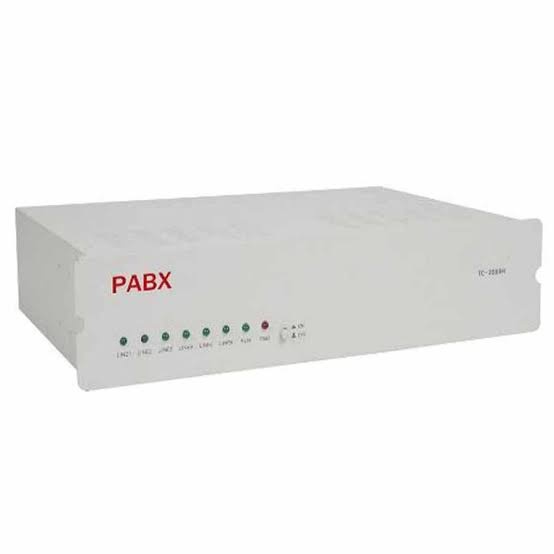
Good communication is one of the foundations of a well-run business. Employees need to speak with customers, departments need to coordinate with each other, and managers need reliable ways to stay connected with their teams. As businesses grow, however, managing all of those conversations through individual phone lines can quickly become complicated and expensive.
This is where PABX Systems can make a practical difference. A Private Automatic Branch Exchange allows organizations to manage internal and external telephone communication through a centralized system. Instead of treating every employee's phone as a separate connection, businesses can create an organized communication network that is easier to manage and expand.
PABX stands for Private Automatic Branch Exchange. In simple terms, it is a business telephone system that manages incoming, outgoing, and internal calls.
One of its biggest advantages is the ability to connect employees internally without requiring a separate external telephone call for every conversation. For example, a receptionist can transfer a customer's call directly to the appropriate department, while employees can contact one another using internal extensions.
This can make everyday communication much more straightforward, particularly in offices with multiple departments and employees.
Modern systems can offer considerably more than basic calling. Depending on the technology being used, businesses may have access to features such as call transfer, call forwarding, voicemail, automated attendants, conference calling, call queues, and integration with other communication platforms.
A small business may initially manage communication with a handful of telephone lines. As the organization expands, that approach can become difficult to maintain.
Customers may call the wrong department, employees may miss important calls, and reception staff can spend unnecessary time manually directing conversations. A structured telephone system helps organize these interactions.
For example, a business can create extensions for sales, accounts, customer service, administration, and management. Incoming calls can then be directed to the appropriate person or team rather than being handled randomly.
This is particularly useful for companies that receive a large number of customer inquiries every day.
From a customer's perspective, the quality of telephone communication can influence how professional a company appears.
Nobody enjoys repeatedly explaining the same problem because their call was transferred incorrectly. Likewise, customers can become frustrated when calls go unanswered or when they cannot reach the appropriate department.
A properly configured system can provide a more organized calling experience. Automated menus, call routing, extensions, and voicemail can help customers reach the right destination more efficiently.
The goal is not to make every interaction automated. Instead, technology should reduce unnecessary delays and help employees spend more time dealing with the actual customer rather than managing the mechanics of the call.
Yes, and this is one of the main reasons businesses adopt centralized telephone systems.
Different departments can have their own extensions and call-handling arrangements. A sales team might receive calls through one queue, while accounts and customer support use separate extensions.
This structure becomes particularly useful when several employees perform similar roles. Calls can be routed to available team members instead of depending on a single individual.
For larger organizations, the system can also be organized across different offices or locations, depending on the infrastructure and technology being used.
Business communication has changed significantly as more employees work from different locations.
Modern IP-based telephone solutions can provide greater flexibility than traditional office-only systems. Depending on the configuration, employees may be able to use business communication services from remote locations while maintaining their company extensions and calling workflows.
This can be useful for organizations with multiple branches or hybrid teams. Rather than creating completely separate communication systems for each location, businesses can build a more connected environment.
However, remote communication also makes network security and reliable connectivity important considerations. A telephone system should therefore be planned alongside the organization's broader IT infrastructure.
Telephone communication generates more information than many businesses realize. Missed calls, voicemail messages, transferred calls, and customer inquiries can all affect daily operations.
A centralized system gives businesses greater control over how calls are handled. Administrators can manage extensions, configure routing rules, adjust user settings, and maintain the overall telephone environment from a central point.
This can also simplify troubleshooting. Instead of dealing with several disconnected telephone arrangements, IT teams can work with a more structured system.
Not every business requires the same telephone infrastructure.
The number of employees, expected call volume, office locations, existing network infrastructure, budget, and future growth should all be considered before selecting a system.
Businesses should also think about the features they genuinely need. A small office may only require extensions, transfers, voicemail, and basic call forwarding. A larger organization may need advanced call queues, conferencing, reporting, automated attendants, and integration with other business applications.
The right solution is therefore not necessarily the one with the longest feature list. It is the one that fits the organization's communication requirements without creating unnecessary complexity.
A telephone system is only useful when it works reliably. Incorrect configuration can result in dropped calls, routing problems, poor audio quality, or difficulties when employees need to make or receive calls.
Professional installation can help businesses plan extensions, configure call routes, connect telephone devices, integrate the system with the network, and establish appropriate security settings.
It can also make future expansion easier. As the company hires more employees or opens another office, a well-planned system can often be expanded without rebuilding the entire communication infrastructure.
Business telephone communication may seem simple from the user's perspective, but the infrastructure behind it can become increasingly complex as an organization grows.
PABX Systems provide businesses with a centralized way to manage that complexity. By organizing extensions, directing calls, supporting internal communication, and offering useful calling features, they can help companies create a more efficient communication environment.
For businesses considering a new telephone system, the best starting point is to examine how employees and customers currently communicate. Identifying common problems—such as missed calls, inefficient transfers, or disconnected offices—can help determine which features are genuinely valuable.
A well-planned PABX system is ultimately not just about making phone calls. It is about making business communication easier to manage, easier to scale, and more consistent for everyone involved.

This post has been authored and published by one of our premium contributors, who are experts in their fields. They bring high-quality, well-researched content that adds significant value to our platform.












Motor Guide provides useful automobile information, including car reviews, vehicle guides, maintenance tips, driving advice, automotive news, and helpful insights for drivers and enthusiasts.