Heavy rain can make an otherwise familiar car suddenly sound different. You may hear squeaking when braking, a humming noise from the tyres, or an unusual sound from underneath the vehicle.
In many cases, these noises are temporary and disappear once water dries from exposed components. However, some sounds can indicate that moisture has highlighted an existing problem that should not be ignored.
Knowing the difference can save you unnecessary worry while helping you recognise situations where professional attention is sensible. Here are some common reasons your car may sound different after heavy rain.
One of the most common reasons for unusual sounds after heavy rain is moisture around the braking system. Brake discs and pads become wet when driving through standing water or during prolonged rainfall.
When you first use the brakes, the thin layer of water between the surfaces can create a squeaking or scraping sound. This usually becomes less noticeable after several normal braking applications.
Surface moisture can also cause light rust to develop on brake discs when a vehicle has been parked outside during wet conditions. This is normally harmless and wears away naturally.
However, persistent grinding, harsh scraping, vibration, or reduced braking performance should not be dismissed as simple rain noise. These symptoms could indicate worn brake components or another mechanical issue.
Rain changes the way tyres interact with the road surface. Water sits between the rubber and tarmac, creating sounds that can be noticeably different from those heard on dry roads.
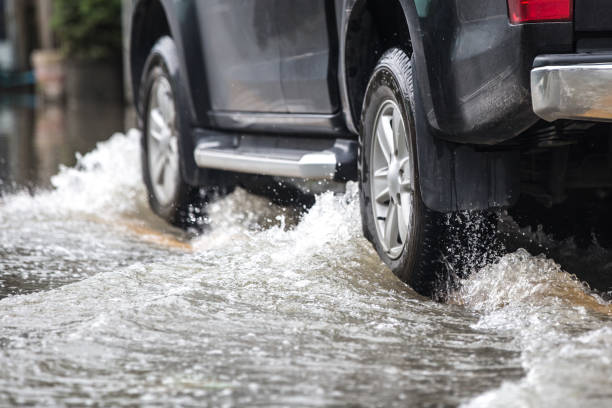
You might hear more pronounced humming, splashing, or rushing sounds around the wheel arches. The noise can become particularly noticeable when driving through deeper puddles or standing water.
Tyre tread is designed to move water away from the contact patch. As water passes through those grooves, it can produce additional road noise, especially at higher speeds.
Uneven tyre wear can make these sounds more noticeable. If the noise continues on dry roads, checking tyre condition, tread depth, pressure, and alignment would be a sensible next step.
A heavy downpour can leave moisture around the engine bay, particularly if water reaches exposed areas near auxiliary belts and pulleys. This may produce a brief squealing sound after starting.
A wet belt can slip slightly as it begins moving, creating a sharp squeal that often disappears once the component dries. The noise may be more obvious during cold starts.
If the squealing continues for several minutes or returns frequently, moisture may not be the only explanation. A worn belt, damaged pulley, or tension problem could also be responsible.
It is therefore useful to pay attention to how long the sound lasts. A brief noise following heavy rain is usually less concerning than persistent squealing under normal driving conditions.
Rainwater can reach parts of the exhaust system, especially when a car is driven through puddles or parked outside during severe weather. This can temporarily alter its usual sound.
You may notice popping, hissing, or a slightly deeper exhaust note while the system warms up. Small amounts of moisture generally evaporate as exhaust temperatures increase.
However, louder rattling or persistent changes can point towards an exhaust component becoming loose or damaged. Water exposure can sometimes reveal weaknesses that were already developing.
Pay particular attention if you smell exhaust fumes inside the cabin. That is not a normal rain related symptom and should be investigated promptly because exhaust gases can be dangerous.
Wheel arches collect plenty of water, mud, leaves, and road debris during heavy rainfall. As the wheels rotate, this mixture can create unusual sloshing, scraping, or tapping sounds.
Plastic liners inside the arches can also become loose or damaged. When wet debris catches against them, you may hear noises that seem to come from underneath the car.
Small stones can occasionally become trapped around brakes or wheels after driving through flooded or muddy areas. Their movement may create intermittent scraping sounds while the vehicle is moving.
If the noise continues after the roads dry, inspect the wheel areas when the car is safely parked. Never place yourself underneath an unsupported vehicle while investigating unusual sounds.
Rain does not normally cause immediate suspension failure, but wet roads can change how suspension components sound during everyday driving. Puddles and uneven surfaces may make knocks more noticeable.
Water and road grime can also reach bushes, joints, and other moving components. If something is already worn, the change in conditions may make an existing noise easier to hear.
You might notice clunking when driving over potholes, speed bumps, or uneven surfaces. A single occasional noise may not mean serious damage, but repeated sounds deserve closer attention.
If your car continues making suspension noises after several dry journeys, consider arranging an inspection. Early checks can identify worn components before they develop into more expensive problems.
Modern cars contain many electrical components, sensors, motors, and connectors that must operate in damp environments. Although they are generally protected, heavy water exposure can occasionally cause unusual sounds or behaviour.
A wet windscreen wiper mechanism may sound louder than usual, particularly when leaves or debris have collected around the base of the windscreen. This is often easy to resolve.
You might also hear electrical motors working harder when using windows, mirrors, fans, or other equipment after prolonged rain. Temporary moisture can sometimes affect how these systems sound.
Persistent buzzing, clicking, warning lights, or electrical failures should receive attention rather than being blamed entirely on weather. Water intrusion can sometimes create faults that become worse over time.
The key question is whether the unusual sound disappears as the car dries. Temporary squeaks, splashes, and light rubbing noises are often less concerning when everything returns to normal.
A noise that remains after several dry journeys deserves more attention. The same applies when a sound becomes progressively louder, occurs at different speeds, or appears during braking.
You should also take warning signs seriously, including steering changes, unusual vibrations, dashboard warnings, burning smells, fluid leaks, or reduced braking performance following heavy rain.
If you are uncertain about a noise, having the vehicle checked by a qualified mechanic is usually the safest approach. A short inspection can prevent a small issue becoming expensive.
Regular vehicle maintenance is one of the simplest ways to reduce unusual noises after wet weather. Check tyre pressures, tread condition, brake condition, fluid levels, and visible belts regularly.
Keeping the wheel arches and windscreen drainage areas reasonably clear can also help. Leaves and dirt can collect quickly during storms, potentially blocking drainage routes or creating unwanted noises.
Avoid driving quickly through deep standing water whenever possible. Besides making the car noisy, flooding can affect brakes, electrical systems, the engine intake, and other components if water becomes too deep.
Most importantly, do not ignore a sound simply because it appeared after rain. Weather may expose a problem rather than cause it, making unusual noises useful early warning signs for drivers.

This post has been authored and published by one of our premium contributors, who are experts in their fields. They bring high-quality, well-researched content that adds significant value to our platform.











Motor Guide provides useful automobile information, including car reviews, vehicle guides, maintenance tips, driving advice, automotive news, and helpful insights for drivers and enthusiasts.